Posts

ev training in mumbai

Ex10S7839 Ex10S7840 Ex10S7841 Ex10S7842 Ex10S7843 Ex10S7844 Ex10S7845 Ex10S7846 Ex10S7847 Ex10S7848 Ex10S7849 Ex10S7850 Ex10S7851 Ex10S7852 Ex10S7853 Ex10S7854 Ex10S7855 Ex10S7856 Ex10S7857 Ex10S7858 Ex10S7859 Ex10S7860 Ex10S7861 Ex10S7862 Ex10S7863 Ex10S7864 Ex10S7865 Ex10S7866 Ex10S7867 Ex10S7868 Ex10S7869 Ex10S7870 Ex10S7871 Ex10S7872 Ex10S7873 Ex10S7874 Ex10S7875 Ex10S7876 Ex10S7877 Ex10S7878 Ex10S7879 Ex10S7880 Ex10S7881 Ex10S7882 Ex10S7883 Ex10S7884 Ex10S7885 Ex10S7886 Ex10S7887 Ex10S7888 Ex10S7889 Ex10S7890 Ex10S7891 Ex10S7892 Ex10S7893 Ex10S7894 Ex10S7895 Ex10S7896 Ex10S7897 Ex10S7898 Ex10S7899 Ex10S7900 Ex10S7901 Ex10S7902 Ex10S7903 Ex10S7904 Ex10S7905 Ex10S7906 Ex10S7907 Ex10S7908 Ex10S7909 Ex10S7910 Ex10S7911 Ex10S7912 Ex10S7913 Ex10S7914 Ex10S7915 Ex10S7916 Ex10S7917 Ex10S7918 Ex10S7919 Ex10S7920 Ex10S7921 Ex10S7922 Ex10S7923 Ex10S7924 Ex10S7925 Ex10S7926 Ex10S7927 Ex10S7928 Ex10S7929...
ev charging station training course

Image
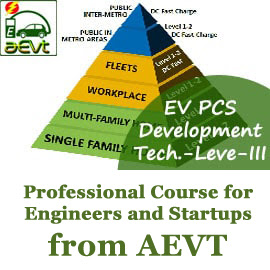
    Learn how to expand your business and increase sales with electric vehicle charging station installations.   Electric Vehicle (EV) Charging station Design Training In World, the automobile industry is one of the key segments driving economic growth; and at the same time, one of the principal contributors to pollution and making World dependent on overseas oil. So, with the government’s sights firmly set on making India a nation chiefly running on electric transportation by 2030 in that  AEVT help lot to implementing Electric Vehicle Design (EVs) have to make their place, despite their share of challenges in terms of manufacturing infrastructure and also the opportunities they can bring in. The analyses what the future of electric vehicles in the country looks like, are all engineers ready for them and what are the areas manufacturers need to look into. AEVT Moto is implementing . Government of India have undertaken multiple initiatives to promote manufacturing an...

Solar Adoption Experience

Image
  one kilowatt of solar system costs less than a premium mobile phone   "We are encouraging rooftop solar, because, the its opportunities to creates jobs, when compared with utility scale solar.  whole eco-system of suppliers, manufacturers of modules, structures, inverters and more have adapted to the business opportunity." - says Expert at Institute of Solar Technology.  Solar Adoption Experience For Consumers  - Solar is not only environmentally responsible, but the investment too breaks-even within 3 to 4 years. The system yields high returns on investment and is commercially viable. with the help of net-metering, the power supply is uninterrupted which in turn reduces the cost of the overall system in the longer run. one kilowatt of solar system costs less than a premium mobile phone and in addition, it’s an investment into green energy and the saving in electricity bill continues for 25 years. Many companies offering to end consumers include both loans wit...

Large government power production facilities

Image
  The solar industry in India   T he country's solar industry is showing signs of recovery with increased activity compared to the previous quarter while 2020  worst years for solar in India as COVID-19 took a heavy toll on the industry,  the industry still has a long way to go. However, the market is almost back on its feet, and the mood is upbeat as the industry heads to 2021 - one of the best years foretasted for the sector," said Raj Prabhu, CEO of Mercom Capital Group. India,  the third-largest solar market in the world, India has witnessed a dip in terms of capacity addition, which fell from 9.6 gigawatt (GW) in 2017 to 8.3 GW in 2018, indicating a slowdown of 16 per cent.  Gradually India is becoming a favorite investment destination for both local and global players. Today  Indian economy has the second-fastest rate of increase in GDP in the world - 7.1%. The country accounts  for one thirds of the world's population without access to...

In light of incoming investment

Image
  Indian solar growth Introduction Indian renewable energy sector is the fourth most attractive renewable energy market in the world. India is ranked fourth in wind power, fifth in solar power and fifth in renewable power installed capacity as of 2018. Market Size As of August 31, 2020, installed renewable energy capacity stood at 88.79 GW, of which solar and wind comprised 35.73 GW and 37.99 GW, respectively. Biomass and small hydro power constituted 10.14 GW and 4.73 GW, respectively. Investments/ Developments According to the data released by Department for Promotion of Industry and Internal Trade (DPIIT), FDI inflow in the Indian non-conventional energy sector stood at US$ 9.22 billion between April 2000 and March 2020. Government initiatives Some initiatives by Government of India to boost India’s renewable energy sector are as follows: In August 2020, the government announced plans to offer land near its ports to companies for building solar equipment factories. India plans t...

Various schemes by governments, including tax benefits

Image
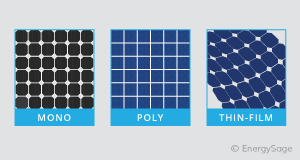
  Solar Cells and Modules Industry The pandemic has therefore provided an opportune time to step-up the focus on renewable energy. Interestingly, renewable energy has emerged to be the most pandemic resilient energy source. While coal fired power plants suffered from disruptions in coal mining & coal transport, renewables like wind and energy helped mitigate risk of power interruptions. Utility-scale solar has proved its cost resilience during the pandemic at a time when prices of coal-fired power spiked, hit by high fixed costs and low electricity demand. Investments & government funding commitments in renewable energy is poised to grow stronger in the post COVID-19 period. Solar cells or photovoltaic cells are defined as individual units of small silicon coated plates made of glass, plastic and other materials, which when exposed to sunlight, convert light energy into electricity at the basic atomic level. The solar cell is chiefly distinguished by its conversion efficien...

alters their optoelectronic properties

Image
  quantum dot solar cell   A novel technology that can improve the efficiency of quantum dot solar cells to 11.53% has been unveiled. Published in the February 2020 issue of  Advanced Energy Materials , it has been evaluated as a study that solved the challenges posed by the generation of electric currents from sunlight by solar cells by enhancing the hole extraction. A research team, led by Professor Sung-Yeon Jang in the School of Energy and Chemical Engineering at UNIST has developed a photovoltaic device that maximizes the performance of quantum dot solar cells by using organic polymers. Solar cells use a characteristic of which electrons and holes are generated in the absorber layer. The free free electrons and hole then move through the cell, creating and filling in holes. It is this movement of electrons and holes that generate electricity. Therefore, creating multiple electron-hole pairs and transporting them are an important con...